

Best overall for anxiety-focused coping exercises: MindShift CBT. Best for guided meditation: Smiling Mind. Best for a gentle self-care routine: Finch. Best screen-free tool: a paper coping card. This 2026 guide compares the best anxiety apps for teens by purpose, privacy, and limitations—not download rankings.
- MindShift CBT leads the best anxiety apps for teens shortlist for anxiety-focused coping exercises, not diagnosis or crisis care.
- Smiling Mind suits guided mindfulness; Finch suits self-care routines. Neither replaces individualized treatment.
- A paper coping card puts grounding reminders within reach without opening another app.
- Choose one tool with your teen, check privacy settings, and seek help when anxiety disrupts daily life.
Why this matters
The right anxiety tool gives a teen something useful to practice; it does not establish why anxiety is happening. A breathing recording, thought exercise, or reminder serves a different purpose from an assessment with a licensed clinician.
Calmcharleston offers anxiety therapy for teens through a private counseling practice led by LPC Kasia Ciszewski, serving Mount Pleasant and Charleston, SC. The practice also offers telehealth therapy. An app can support between-session practice, but the choice should follow the teen's needs rather than dictate their care.
For your 2026 shortlist, start with the problem you want help addressing. A teen who wants a guided pause needs something different from a teen who wants to examine anxious predictions. Ask what feels useful before installing anything.
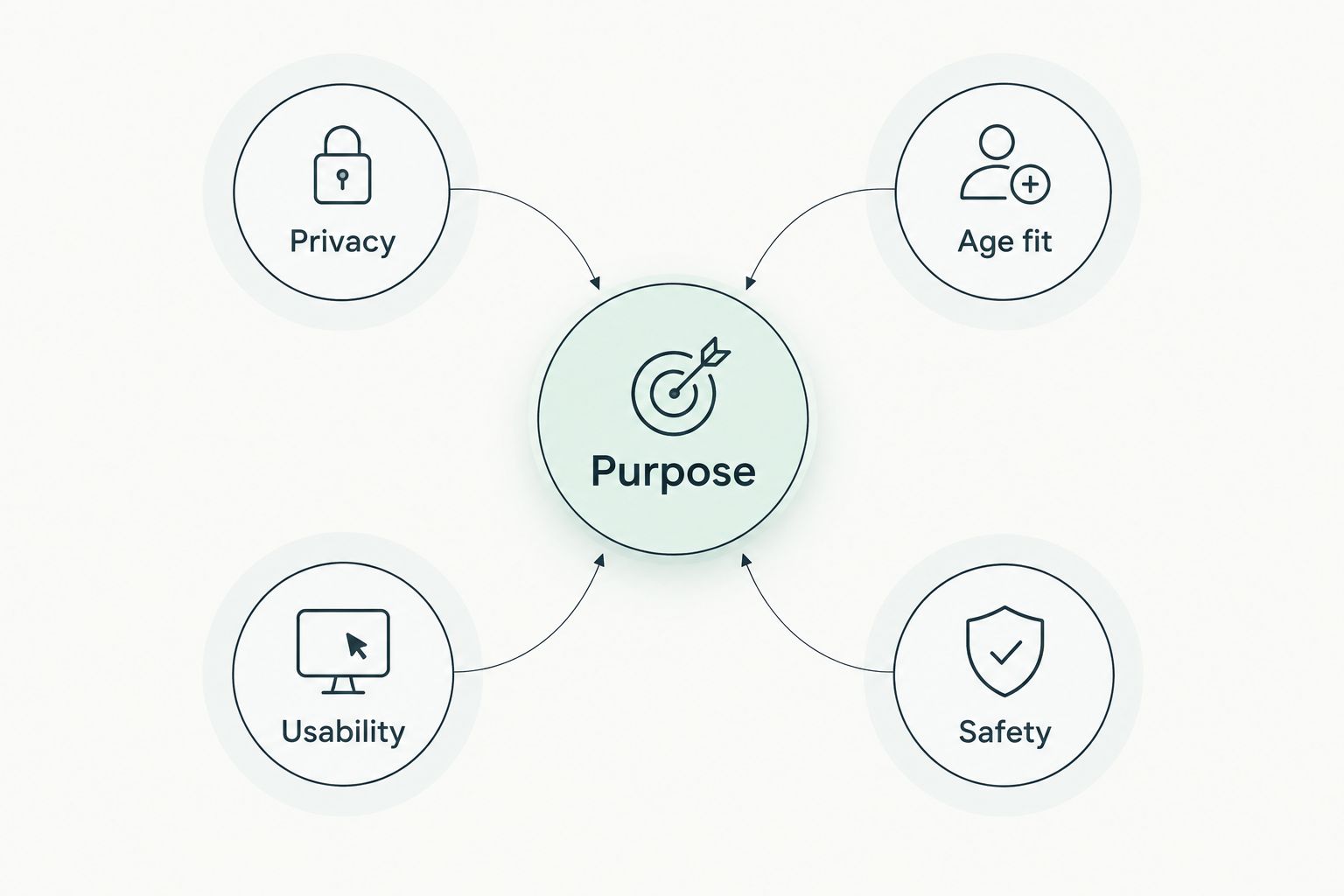
What makes the best anxiety apps for teens?
Use these criteria before comparing features:
- Purpose: Does the tool teach anxiety-focused skills, guide meditation, or organize everyday self-care? These are different jobs.
- Privacy: Review what the app collects, what others can see, and whether entries can be deleted. Avoid recording identifying details unnecessarily.
- Age fit: Check current age requirements and consent terms. A youth-friendly appearance does not establish eligibility or clinical suitability.
- Usability: Your teen should be able to find the relevant exercise without a long search or distracting detours.
- Safety: The tool should complement human support, not become the only response to worsening symptoms or an emergency.
Treat privacy as a selection requirement, not a setup chore. Before entering anything personal, read the current policy together and check notification previews on a locked screen. A reminder that reveals sensitive information can defeat the privacy you intended to protect.
A good fit also leaves room for disagreement. If your teen dislikes meditation, another meditation app is not automatically the answer. Ask whether they would rather listen, write, move, or use a brief reminder.
Best anxiety apps and tools at a glance
| Rank and option | Best for | Standout feature | Key limitation |
|---|---|---|---|
| 1. MindShift CBT | Practicing anxiety-focused coping skills | Cognitive behavioral therapy-based exercises | Self-guided exercises cannot provide individualized assessment |
| 2. Smiling Mind | Guided mindfulness practice | Meditation and mindfulness activities | Meditation does not address every source of anxiety |
| 3. Finch | Building a gentle self-care routine | Virtual-pet framing for everyday goals and reflection | Routine support is not anxiety treatment |
| 4. Paper coping card | Recalling coping steps without a screen | Personally chosen prompts in a portable format | No guidance or feedback when a plan is not helping |
These are use-case recommendations, not a claim that one product treats anxiety better than another. For a broader comparison of formats, see the guide to mental health apps for Gen Z.
1. MindShift CBT: best anxiety app for coping exercises
MindShift CBT, from Anxiety Canada, organizes self-help around cognitive behavioral therapy principles. Its tools include examining anxious thoughts and practicing coping skills. Choose it when your teen wants structured exercises rather than a general wellness feed.
MindShift CBT pros:
- Its anxiety-focused purpose makes the intended use clear.
- Thought exercises provide a structure for examining a worrying prediction.
- Coping activities give you something specific to discuss with a therapist.
MindShift CBT cons:
- Self-directed exercises do not explain which approach fits an individual teen's symptoms.
- Writing about thoughts can feel demanding when a teen is already overwhelmed.
- Completing exercises does not establish that anxiety is improving.
Best for: Teens who want to understand anxious predictions and practice a structured response.
For a practical first use, choose a manageable everyday worry—not the most distressing experience your teen has faced. Write 1 sentence describing the prediction, then distinguish what is known from what is assumed. Stop if the activity becomes overwhelming and discuss a different starting point with a clinician.
2026 verdict: Choose MindShift CBT for anxiety-focused skill practice; skip it as a substitute for assessment or treatment.
2. Smiling Mind: best anxiety app for guided mindfulness
Smiling Mind provides guided meditation and mindfulness activities. It fits a teen who prefers listening and practicing attention over typing through a thought exercise. The useful distinction is format: this is mindfulness practice, not a personalized explanation of anxiety.
Smiling Mind pros:
- Audio guidance removes the need to invent a meditation routine.
- Mindfulness offers a way to practice noticing thoughts and sensations without answering each one.
- Listening provides an alternative to written reflection.
Smiling Mind cons:
- Sitting quietly or focusing inward is not comfortable for everyone.
- Meditation alone does not resolve school conflict, relationship difficulties, or other external stressors.
- Guided content cannot adjust to distress the way a clinician can.
Best for: Teens who want guided attention practice and are comfortable trying meditation.
Let your teen keep their eyes open or stop an exercise. If attention to breathing increases discomfort, switch to noticing the room or feeling their feet against the floor. Finishing the recording is not the goal; finding a tolerable way to practice is.
Verdict: Choose Smiling Mind for guided mindfulness; skip the expectation that meditation must make anxiety disappear.
3. Finch: best anxiety tool for self-care routines
Finch uses a virtual-pet format to frame self-care activities, goals, and reflection. It belongs on this list for routine support rather than anxiety-specific treatment. Choose it when a teen likes a playful structure for actions they have selected themselves.
Finch pros:
- The virtual-pet format offers an alternative to clinical-looking worksheets.
- Personal goals let your teen focus on relevant everyday actions.
- Reflection prompts provide a starting point when a blank journal feels difficult.
Finch cons:
- Rewards and completion cues can become another obligation if your teen experiences them as pressure.
- Finishing a task does not show whether anxiety or functioning has changed.
- General self-care activities cannot replace an individualized treatment plan.
Best for: Teens who want help remembering small self-care actions and enjoy a virtual companion.
Start with a goal your teen already considers useful, such as preparing school materials or taking a break from scrolling. Do not turn the app into a parent-managed compliance tracker. If checking it becomes another source of conflict, choose a different format.
During a 2026 app review, ask whether the routine helps outside the screen. A completed checklist matters less than whether your teen can take the action without feeling controlled by it.
Verdict: Choose Finch for self-directed routine support; skip it when rewards or reminders add pressure.
4. Paper coping card: best screen-free anxiety tool
A paper coping card holds a short plan your teen chooses in advance. It can include a grounding reminder, a manageable next action, and a trusted person to contact. It requires no account, notifications, or app navigation.
Paper coping card pros:
- Your teen can read it without opening a phone.
- The wording can match a therapist's recommendations and the teen's preferences.
- It avoids storing journal entries in an app account.
Paper coping card cons:
- Someone else can read the card if it is left out or lost.
- A static reminder cannot respond when the plan stops helping.
- A card is not an emergency assessment or a substitute for human support.
Best for: Teens who want discreet reminders at school, during transitions, or away from their phone.
Use 3 prompts: what to notice, what to do next, and whom to contact. Keep each prompt brief enough to understand while upset. Avoid putting a diagnosis, detailed personal history, or other sensitive information on a card carried in public.
A parent can offer help writing it, but the teen should recognize their own language. Instructions that sound reassuring to an adult are not automatically useful to the person reading them.
Verdict: Choose a coping card for accessible reminders; skip any version that contains instructions your teen does not understand or accept.
How the recommendations are ranked
The order follows the selection criteria: purpose, privacy, age fit, usability, and safety. MindShift CBT comes first because its stated purpose most closely matches anxiety-focused skill practice. Smiling Mind and Finch serve narrower, different preferences; the coping card serves a screen-free need.
This is a fit-based guide, not a clinical trial or a guarantee of results. For any 2026 download, verify current age requirements, privacy terms, and features before your teen creates an account. Do not use popularity as a substitute for that check.
Which anxiety tool should your teen choose?
Choose MindShift CBT as the default when the goal is structured anxiety coping practice. Choose Smiling Mind for guided mindfulness, Finch for self-care routines, or a paper card when opening an app gets in the way.
Start with 1 tool. Agree on its purpose, decide what information stays private, and ask what would make it unhelpful. You do not need several accounts to learn whether a format fits.
Calmcharleston's anxiety therapy for teens addresses a different need from an app: individualized support from a licensed counselor. Seek professional assessment when anxiety interferes with school, sleep, relationships, or ordinary activities. Do not wait for an app to confirm that the disruption counts.
Explore counseling for teen anxiety
Learn about the practice serving teens in Mount Pleasant and Charleston, SC, with telehealth therapy also offered.
FAQ
What's the best anxiety app for a teenager?
MindShift CBT is the default pick in this guide for anxiety-focused coping exercises. Choose Smiling Mind for guided mindfulness or Finch for self-care routines instead when that purpose better matches your teen's needs.
Can anxiety apps replace therapy for teens?
Anxiety apps do not replace individualized assessment or therapy. They can provide exercises and reminders, but they cannot determine the cause of symptoms or adjust a treatment plan through a clinical relationship.
Is MindShift CBT better than Finch for anxiety?
MindShift CBT is the closer fit for anxiety-focused exercises; Finch is the closer fit for self-care routines. That difference in purpose does not establish that either app will produce better results for an individual teen.
What if meditation makes my teen more anxious?
Stop the meditation rather than require your teen to finish it. Try an outward-focused activity, such as noticing objects in the room, and discuss persistent discomfort with a qualified clinician.
How do I check whether an anxiety app is private?
Read the current privacy policy, age requirements, and account settings before entering personal information. Check data sharing, deletion options, and notification previews; do not assume a wellness app has the same privacy arrangements as a therapy practice.
Should parents read a teen's anxiety app journal?
Agree on privacy expectations before your teen starts journaling. Separate ordinary privacy from safety concerns, and ask a clinician to help establish boundaries when those needs conflict.
What should I do if my teen talks about suicide?
Take the statement seriously and seek immediate human support. In the United States, call or text 988 for the Suicide & Crisis Lifeline; call 911 for immediate danger or a medical emergency. An anxiety app is not crisis care.
One last thing
Measure usefulness by what happens after the app closes. Can your teen name a next step, ask for help, or return to an activity that matters? A streak or completed exercise does not answer those questions.
For your 2026 choice, ask your teen to identify one skill worth keeping even without the app. If that question is difficult to answer, simplify the plan. Calmcharleston provides counseling for teens when individualized support—not another download—is the next step.