
Best overall for structured practice: Headspace. Best for bedtime wind-down: Calm. Best for exploring teachers: Insight Timer. Best for youth-focused mindfulness: Smiling Mind. This 2026 guide compares the best meditation apps for anxiety by how you will use them—not by promises that an app can treat an anxiety disorder.
- Headspace leads the best meditation apps for anxiety when you want structured guided practice.
- Calm suits bedtime wind-down; Insight Timer suits exploring different meditation teachers.
- Smiling Mind suits youth-focused mindfulness practice, with adult support when appropriate.
- Calmcharleston offers anxiety counseling; meditation apps support practice but do not replace individualized care.
Why this matters
The most useful meditation app is one you can open without turning relief into another task. A large library helps someone who enjoys exploring; it creates another decision for someone already overwhelmed.
Headspace is the best default for readers who want structured meditation practice rather than an open-ended library. That is a recommendation about format, not a claim that Headspace produces better clinical outcomes than the other apps.
If anxiety is disrupting sleep, relationships, work, or school, an app should not be your entire plan. Calmcharleston offers individual, couples, and telehealth therapy for teens, adults, and seniors, including support for anxiety in Mount Pleasant and Charleston, South Carolina.
What makes the best meditation apps for anxiety?
For this 2026 shortlist, the deciding question is simple: does the app make a useful practice easier to repeat?
- Clear guidance: Instructions should explain what to notice and what to do when your attention wanders.
- A suitable starting point: A guided course, bedtime recording, or youth-focused exercise should match your immediate goal.
- Manageable choice: You need enough variety to find a fit, not so much that choosing becomes the whole activity.
- A comfortable focus: Breath, sound, and body awareness feel different. Choose guidance you can follow without forcing yourself through distress.
- Realistic expectations: Meditation is a practice, not a guarantee of immediate calm or a replacement for assessment and treatment.
A long session is not automatically a better session. Start with a 3-minute practice if that feels manageable, and stop measuring success by whether every anxious thought disappears.
Best meditation apps for anxiety at a glance
| App | Best for | Standout feature | Key limitation |
|---|---|---|---|
| Headspace | Building a structured routine | Guided meditation courses | A course format is less suited to unrestricted exploration |
| Calm | Bedtime wind-down | Sleep Stories and sleep-focused audio | Listening at bedtime is not the same as practicing daytime coping skills |
| Insight Timer | Finding a preferred teacher | A broad library of teacher-led meditations | Browsing requires more selection and judgment |
| Smiling Mind | Youth-focused mindfulness | Mindfulness content designed for children and young people | Youth-oriented material is not every adult's preferred style |
These are use-case rankings, not a clinical effectiveness ranking. The table separates formats so you can choose without assuming that more content means better anxiety care.
1. Headspace: best meditation app for a structured routine
Headspace offers guided meditation courses and individual practices. Its course-based format gives you a clearer next step than an open library, which makes it the default recommendation for a beginner who wants direction.
Best for: Adults who want to learn meditation through a sequence rather than assemble a routine from unrelated recordings.
Headspace pros
- Guided courses provide a defined starting point and progression.
- Individual meditations let you practice without always following a course.
- A structured format reduces the need to choose a different teacher or approach each time.
Headspace cons
- A set sequence is less flexible than choosing freely across teachers and traditions.
- Following recordings does not provide individualized feedback about your anxiety.
- Finishing a course can become an unhelpful target if you treat completion as proof that you should feel better.
How to use Headspace: Choose an introductory sequence and repeat the same practice before adding more content. Notice whether the instructions help you return attention gently, not whether you can keep your mind blank.
A useful goal is recognizing a thought without immediately following it into another worry. You do not need to suppress thoughts, force relaxation, or perform meditation correctly to make the exercise worth trying.
Verdict: Buy only if you want the structured format; skip Headspace if exploring different teachers matters more.
2. Calm: best meditation app for bedtime wind-down
Calm combines guided meditation with sleep-focused audio, including Sleep Stories. That makes it a practical choice when your intended use is a transition out of the day rather than a course in meditation.
Best for: Adults looking for an audio-based bedtime routine.
Calm pros
- Sleep Stories give you an alternative to a formal seated meditation.
- Guided meditations offer another format when you want active instruction.
- Sleep-focused audio provides a clear use case for readers who dislike choosing among general mindfulness topics.
Calm cons
- Listening to a story is not the same activity as learning to work with anxious thoughts during the day.
- Bedtime audio does not identify the causes of persistent sleep difficulties.
- Narration is personal: a voice or storytelling style that suits another listener can feel distracting to you.
How to use Calm: Decide whether tonight's goal is listening or meditation before opening the app. Choose one recording rather than repeatedly searching for something that promises a stronger effect.
For a 2026 bedtime routine, keep the app's role narrow: it supplies audio for winding down. Persistent insomnia or anxiety needs a broader conversation with a qualified clinician, not an increasingly elaborate search for the perfect recording.
Verdict: Buy for bedtime audio if that is your main goal; skip Calm as your only response to persistent sleep problems.
3. Insight Timer: best meditation app for exploring teachers
Insight Timer offers teacher-led guided meditations alongside a meditation timer. Its main appeal is variety: you can compare voices, instruction styles, and approaches instead of committing to one presentation.
Best for: Readers who know that the teacher's voice and approach strongly affect whether they will practice.
Insight Timer pros
- Different teachers let you compare instruction styles.
- Guided recordings support exploration before you settle on a routine.
- The timer supports self-directed practice when you do not want narration.
Insight Timer cons
- A broad library leaves more of the selection work to you.
- Teacher descriptions and appealing titles are not proof that a recording fits your clinical needs.
- Switching recordings constantly makes it harder to judge whether one approach is useful.
How to use Insight Timer: Choose a teacher whose instructions feel clear and respectful. Repeat a selected recording before searching again, unless the exercise causes distress or simply does not suit you.
If browsing becomes another form of reassurance-seeking, simplify. Save one recording and remove the expectation that a better voice, title, or technique will eliminate uncertainty.
The timer is a separate option, not a required next level. Unguided practice is not inherently more accomplished than following a recording.
Verdict: Hold off on adding more content until you have tried a consistent teacher; choose Insight Timer when variety serves a specific purpose.
4. Smiling Mind: best meditation app for youth-focused practice
Smiling Mind provides mindfulness content designed for children and young people. It belongs on this list because youth-focused practice calls for a different starting point than an adult bedtime library or an open teacher directory.
Best for: Families introducing mindfulness to children or teenagers, with adult involvement appropriate to the young person's needs.
Smiling Mind pros
- Youth-focused material offers a more relevant starting point than adult-oriented recordings.
- Guided exercises give families a concrete activity to discuss.
- Mindfulness practice can be introduced as a skill rather than a demand to stop feeling anxious.
Smiling Mind cons
- Youth-oriented language and examples will not suit every adult.
- A young person's willingness matters; an app cannot make an unwanted exercise supportive.
- Recordings cannot assess school avoidance, trauma symptoms, or other difficulties requiring individual care.
How to use Smiling Mind: Invite the young person to try an exercise and ask what felt useful, confusing, or uncomfortable. Avoid using meditation as a punishment or telling them that continued anxiety means they did it incorrectly.
For families choosing an app in 2026, the priority is fit and consent, not completing every activity. If a child or teenager is struggling with daily functioning, arrange professional support rather than repeatedly changing apps.
Verdict: Skip Smiling Mind if you want an adult-focused library; choose it when youth-focused instruction matches the person practicing.
How this shortlist is ranked
The ranking prioritizes clear guidance, a suitable starting point, manageable choice, a comfortable focus, and realistic expectations. Headspace leads for a defined learning path; the other apps earn separate recommendations for bedtime audio, teacher exploration, and youth-focused instruction.
This 2026 guide does not rank the apps by treatment success. Content format and clinical effectiveness are different questions, and an app's catalog does not establish how well it will address your particular anxiety.
How to choose without turning it into another project
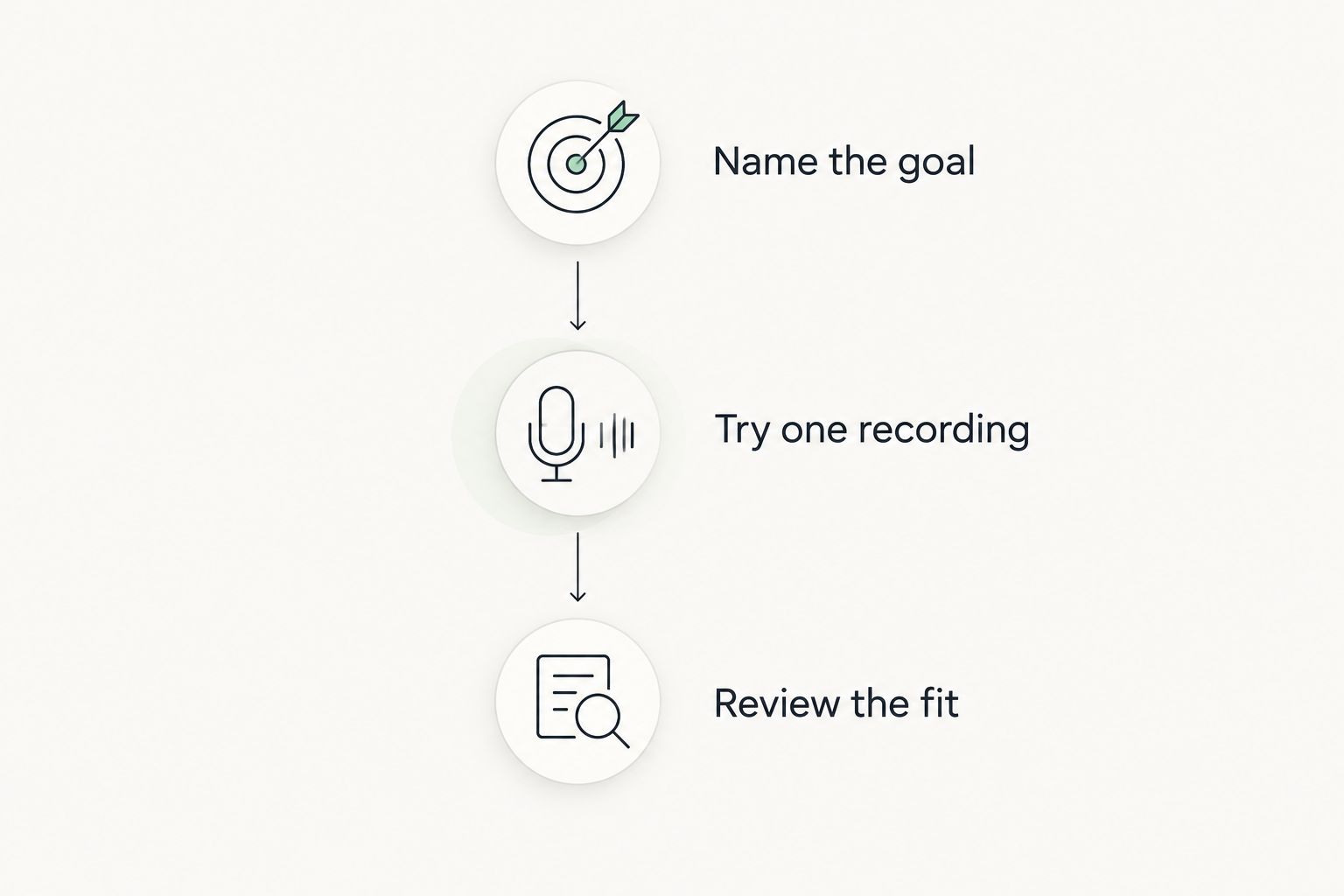
Use this sequence to narrow your choice. You are selecting a practice format, not making a permanent commitment.
- Name the goal. Choose structured learning, bedtime wind-down, teacher exploration, or youth-focused practice.
- Try one recording. Start with a short exercise and pay attention to how the instructions land.
- Review the fit. Decide whether the format is understandable, tolerable, and realistic to repeat.
Try a 5-minute session if a shorter exercise feels too brief, but do not extend the session to prove anything. After 7 days of practice, review whether the routine fits your life; this is a suggested check-in, not a deadline for anxiety improvement.
Ask practical questions. Did you understand the guidance? Did you spend more time practicing than browsing? Could you stop without feeling that you had failed?
If inward attention feels overwhelming, open your eyes, look around the room, and stop the recording. You do not need to push through distress to earn a benefit.
When an app is not enough
Meditation apps cannot diagnose anxiety, assess your individual history, or adapt treatment through a therapeutic relationship. Seek professional support when anxiety interferes with everyday responsibilities, leads you to avoid important activities, or feels difficult to manage alone.
Calmcharleston provides anxiety counseling through a private practice led by LPC Kasia Ciszewski. Individualized care offers a different kind of support from a recording: space to discuss your symptoms, circumstances, and goals.
Do not use a meditation app as crisis care. If you are in immediate danger, contact emergency services or seek urgent in-person help.
Explore support for anxiety
Learn about counseling for teens, adults, and seniors in Mount Pleasant and Charleston.
Which meditation app should you choose?
Choose Headspace if you are undecided and want structured guidance. Choose Calm for bedtime listening, Insight Timer for teacher variety, and Smiling Mind for youth-focused practice.
For 2026, keep the decision small: select the format that matches your goal, try it without demanding immediate relief, and reassess. More subscriptions, recordings, or practice streaks are not a substitute for getting help when anxiety limits your life.
FAQ
What's the best meditation app for anxiety if I'm a beginner?
Headspace is the default recommendation for beginners who want structured guided practice. Its course format provides a clearer sequence than choosing freely from a broad library; this is a format recommendation, not a clinical effectiveness claim.
Is Calm better than Headspace for anxiety?
Calm is the better fit for bedtime audio, while Headspace is the better fit for a structured meditation routine. Choose by your intended use rather than assuming either app treats anxiety more effectively.
Which meditation app is best if I dislike the narrator's voice?
Insight Timer is the strongest fit on this shortlist for exploring different teachers. Compare instruction styles, then repeat a suitable recording instead of continually searching.
What's a good mindfulness app for a teenager?
Smiling Mind is a relevant starting point for youth-focused mindfulness. Let the teenager help decide whether the exercise feels useful, and seek professional support when anxiety disrupts daily life.
Can a meditation app replace anxiety therapy?
A meditation app cannot replace individualized anxiety therapy. Recordings do not assess your history, diagnose symptoms, or adjust a treatment plan through ongoing clinical care.
What should I do if meditation makes me feel more anxious?
Stop the recording if meditation increases distress. Open your eyes and orient to your surroundings; discuss repeated or intense reactions with a qualified mental health professional before trying to push through them.
How long should I meditate when starting out?
Start with a short session you can tolerate and repeat without pressure. A three-minute practice is a suggested starting point, not a required dose or a promise of relief.
One last thing
You can finish a meditation and still feel anxious without having failed. The useful question is whether the practice helps you respond to the moment—not whether it removes every uncomfortable feeling.
Keep the app if it supports that goal. If anxiety keeps narrowing your life, make the next step a conversation about care rather than another download.