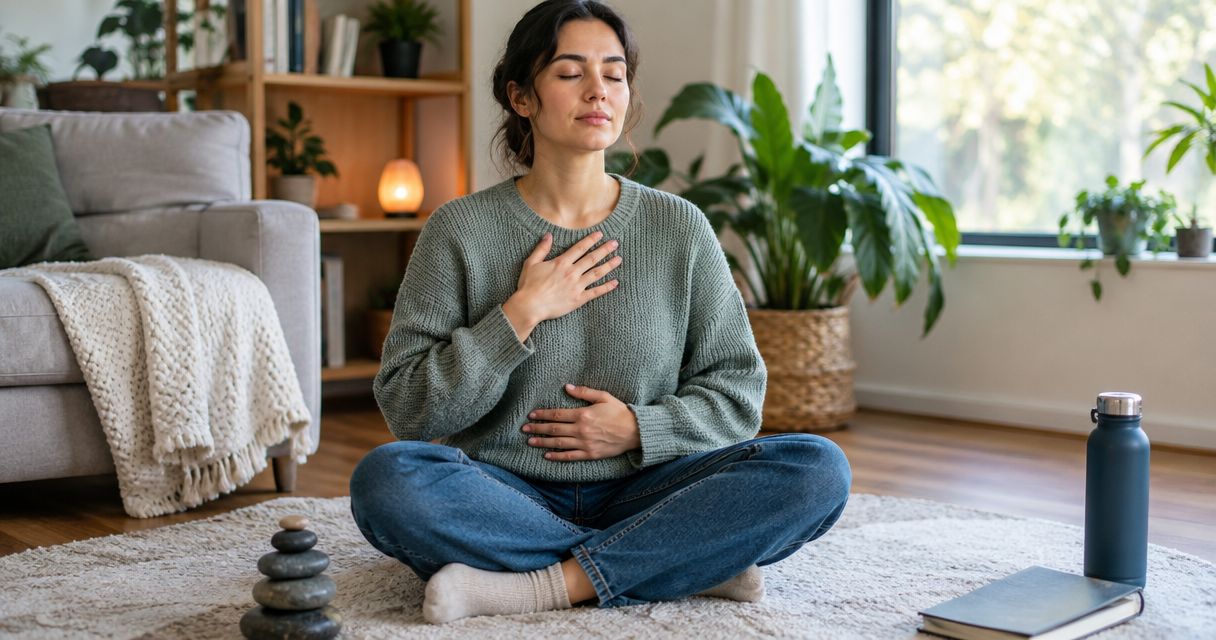
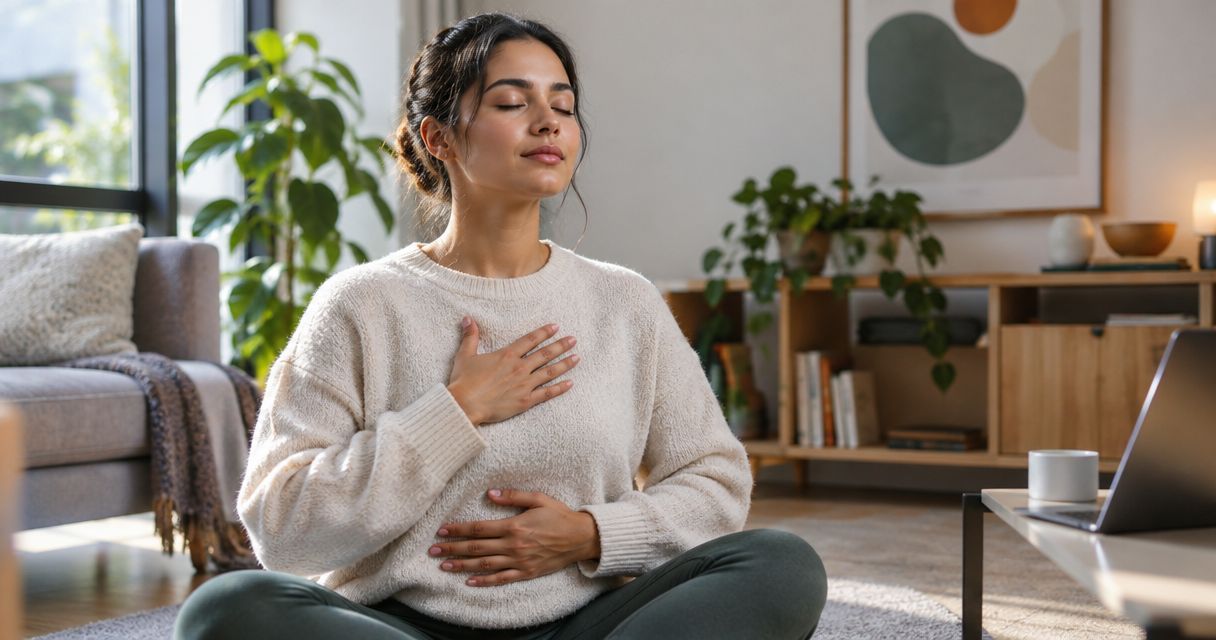
Best starting point: gentle paced breathing. Best for a simple exhale cue: pursed-lip breathing. Best for practicing between episodes: diaphragmatic breathing. These are the best breathing exercises for panic attacks to consider first in 2026; box breathing belongs lower on the list because breath holds can feel uncomfortable when you already feel short of breath.
- The best breathing exercises for panic attacks start with gentle pacing, not large, forced breaths.
- Pursed-lip breathing gives you a simple exhale cue; diaphragmatic breathing suits practice between episodes.
- Skip breath holds when they increase air hunger, dizziness, or distress.
- Calmcharleston offers anxiety counseling when you want support beyond breathing exercises.
Why this matters
During panic, trying harder to get a satisfying breath can turn into repeated large inhalations. Overbreathing can contribute to lightheadedness and tingling, making frightening sensations harder to interpret. Aim for comfortable breathing, not the deepest breath you can take.
Breathing exercises are coping tools, not a way to diagnose chest pain or prove that symptoms are harmless. Call 911 for new or severe chest pain, fainting, severe difficulty breathing, or symptoms that suggest a medical emergency. Do not delay care to finish an exercise.
For ongoing anxiety support, Calmcharleston offers individual, couples, and telehealth therapy. You do not need to master a breathing technique before asking for help.
What makes the best breathing exercises for panic attacks
This 2026 guide prioritizes comfort and simplicity over complicated counting patterns. An exercise belongs in your coping plan only if you can use it without forcing your breath.
- Comfortable breath size: The exercise should not require repeated maximum inhalations.
- Simple instructions: A short cue is easier to follow when attention is scattered.
- Flexible pacing: You should be able to shorten a count rather than struggle to reach it.
- No required breath holds: Holding is optional, not a test of whether you are doing the exercise correctly.
- A clear stopping rule: Stop deliberate breath control if it increases dizziness, air hunger, or distress.
No exercise earns its place by promising to stop every attack. The useful question is whether it helps you respond to the moment without adding another struggle.
Breathing exercises at a glance
| Rank and exercise | Best for | Standout feature | Key limitation |
|---|---|---|---|
| 1. Gentle paced breathing | Starting during rising panic | Comfortable breaths without required holds | Counting can become another source of pressure |
| 2. Pursed-lip breathing | Following a physical exhale cue | Lightly narrowed lips guide the out-breath | Forcing a long exhale can increase discomfort |
| 3. Diaphragmatic breathing | Practicing between episodes | Gentle attention to lower-rib and abdominal movement | Internal body focus can feel unsettling |
| 4. Box breathing | Calm practice with a structured pattern | Equal phases provide a clear sequence | Breath holds can aggravate air hunger |
These exercises overlap. You do not need to combine all four, and switching repeatedly during an attack can make the task more demanding.
1. Gentle paced breathing: best for starting during rising panic
Gentle paced breathing means slowing your breathing without making each breath larger. There is no mandatory ratio or hold. Start here if you want the fewest moving parts.
Sit with support if you can, loosen your shoulders, and let your next breath happen without pulling in extra air. Breathe in gently through your nose if comfortable, then release the breath without squeezing your lungs empty.
How to try gentle paced breathing
- Notice your current breathing without immediately correcting it.
- Take a small, comfortable inhalation.
- Let the exhalation leave softly.
- Repeat only while the rhythm feels manageable.
If counting helps, gently count from 1 to 5 on the inhale and again on the exhale. You do not have to reach five; shorten the count rather than take a bigger breath.
Gentle paced breathing pros:
- No required breath holds.
- Works without an app or visual timer.
- Allows you to adjust the pace to your comfort.
Gentle paced breathing cons:
- Watching your breathing can intensify self-monitoring.
- A rigid count can make an otherwise simple exercise feel like a performance test.
Best for: Someone who wants a straightforward starting exercise during rising panic.
Verdict — use: Choose gentle paced breathing first, and drop the counting if the counting becomes the problem.
2. Pursed-lip breathing: best for a simple exhale cue
Pursed-lip breathing uses lightly narrowed lips during the out-breath. The purpose here is to give your exhale a gentle physical cue, not to blow hard or empty your lungs completely.
Inhale comfortably through your nose if possible. Then breathe out through lips held loosely as though you were cooling warm food. Keep your jaw and shoulders relaxed.
How to try pursed-lip breathing
A familiar practice pattern is 2 seconds in and 4 seconds out, but treat that as an optional guide rather than a target. If the longer exhale creates air hunger, shorten it and return to your ordinary rhythm.
You should not need to brace your stomach or push out the final air. Let the next breath arrive naturally instead of taking a compensatory gulp.
Pursed-lip breathing pros:
- Provides a physical cue without requiring mental imagery.
- Does not require a breath hold.
- Can be practiced without counting aloud.
Pursed-lip breathing cons:
- A deliberately long exhale can feel uncomfortable during panic.
- Blowing forcefully adds effort instead of reducing it.
Best for: Someone who prefers a physical breathing cue to counting or watching a screen.
Verdict — use selectively: Choose pursed-lip breathing when the soft exhale feels easier than ordinary counting; skip it when it feels restrictive.
3. Diaphragmatic breathing: best for practice between episodes
Diaphragmatic breathing directs attention toward gentle movement around the lower ribs and abdomen. It does not mean pushing your stomach outward or filling your lungs to their maximum capacity.
Practice while you feel relatively settled, rather than introducing an unfamiliar body-focused exercise at the peak of panic. Familiarity lets you decide whether this kind of attention feels useful or uncomfortable.
How to try diaphragmatic breathing
Sit supported or lie in a comfortable position. Rest a hand lightly over your abdomen or lower ribs, then breathe normally and notice the movement beneath your hand.
Allow a gentle expansion as you inhale and an easy release as you exhale. Keep your upper body relaxed, but do not try to eliminate every movement in your chest. The goal is comfortable breathing, not a perfectly motionless rib cage.
Diaphragmatic breathing pros:
- Gives you a touch-based cue for gentle breathing.
- Can be practiced without a timed pattern.
- Helps you notice whether you are adding unnecessary effort.
Diaphragmatic breathing cons:
- Attention to internal sensations can increase anxiety for some people.
- Trying to make the abdomen move dramatically encourages oversized breaths.
Best for: Someone who wants to rehearse a comfortable breathing pattern between episodes.
Verdict — practice first: Try diaphragmatic breathing when settled, and keep it only if body-focused attention feels tolerable.
4. Box breathing: best for structured practice when calm
Box breathing divides breathing into equal phases: inhale, hold, exhale, hold. A familiar version uses 4 seconds per phase.
That structure is also its limitation during panic. If you already feel unable to get enough air, holding your breath adds a demand that you do not need to meet.
How to approach box breathing
If you are comfortable with breath holds, explore the pattern when calm rather than treating it as your emergency default. Keep the inhalation gentle and stop if either hold creates strain.
There is no benefit in forcing yourself through a count because a diagram says so. If you remove the holds, you are using a simpler paced-breathing pattern—and that is a valid choice.
Box breathing pros:
- Provides a clearly defined sequence.
- Gives people who like structure a repeatable practice format.
- Can be followed without equipment.
Box breathing cons:
- Breath holds can increase air hunger or distress.
- Equal counts can distract you from whether the exercise actually feels comfortable.
Best for: Someone who enjoys structured practice and already tolerates brief breath holds comfortably.
Verdict — wait: Save box breathing for calm practice; skip it during panic if holding your breath feels unpleasant.
How to choose without overthinking it
For your 2026 coping plan, choose one starting exercise and one alternative. You do not need a collection of techniques to use in sequence.
- Rising panic: Start with gentle paced breathing.
- Counting feels stressful: Try a soft pursed-lip exhale without a timer.
- Calm practice: Explore diaphragmatic breathing.
- Holds feel uncomfortable: Leave box breathing out.
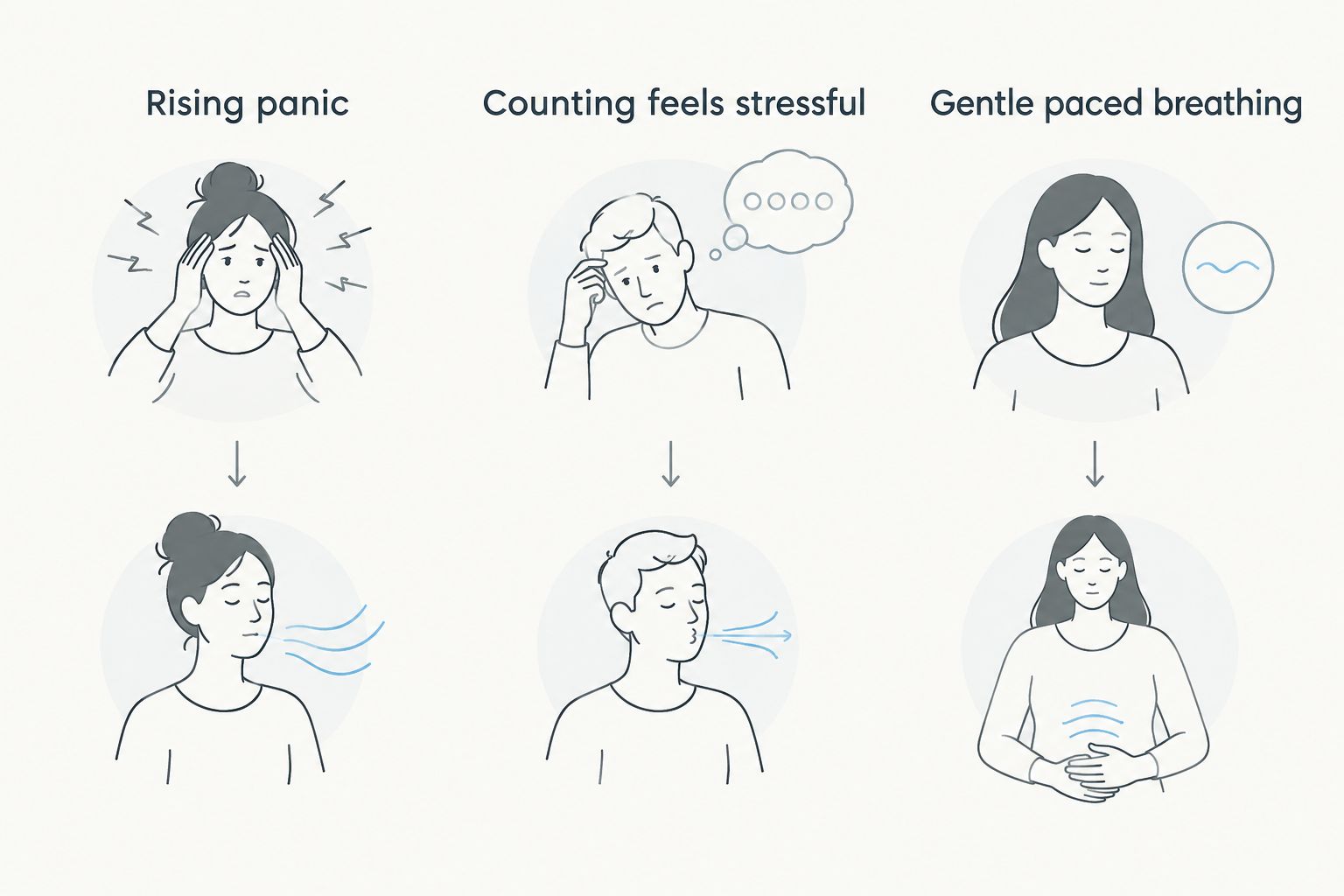
If deliberate breathing makes things worse, stop controlling the rhythm and orient outward. Notice the chair supporting you, look around the room, or describe a nearby object. You can support yourself without continuing an exercise that increases distress.
How these exercises were ranked
The ranking uses the criteria above: comfortable breath size, simple instructions, flexible pacing, no required holds, and a clear stopping rule. It is a practical selection guide, not a claim that one technique has beaten every other technique in clinical trials.
Gentle paced breathing comes first because it asks you to manage less. Box breathing comes last because its required holds add a potential difficulty during an already uncomfortable experience.
When breathing exercises are not enough
If fear of another attack changes where you go, how you travel, or what you avoid, address that pattern rather than continually adding breathing drills. Recurrent episodes also deserve clinical assessment, especially when symptoms are new or have changed.
Calmcharleston offers anxiety counseling for teens, adults, and seniors seeking support beyond breathing exercises. Tell your clinician what happens before, during, and after episodes, including whether breath-focused exercises make you feel better or worse.
For 2026, make the next step specific: discuss the episodes themselves, not just which exercise to try. A clinician can help assess symptoms and discuss treatment options, including cognitive behavioral therapy when appropriate.
Explore anxiety counseling
Individual, couples, and telehealth therapy for teens, adults, and seniors.
Which breathing exercise should you choose?
Choose gentle paced breathing as your default. Use a comfortable breath size, avoid compulsory holds, and shorten or abandon the count whenever it creates pressure.
Choose pursed-lip breathing if a soft physical exhale cue suits you better. Practice diaphragmatic breathing between episodes, and treat box breathing as optional—not an advanced skill you must eventually master.
FAQ
What's the best breathing exercise during a panic attack?
Gentle paced breathing is a practical starting choice because it does not require breath holds or large inhalations. Keep each breath comfortable and stop deliberate control if it increases distress.
Should I take deep breaths when I'm panicking?
Avoid repeatedly taking the largest breath you can. Gentle, comfortable breathing is a better target because overbreathing can contribute to dizziness and tingling.
Is box breathing better than diaphragmatic breathing for panic?
Box breathing is not the default choice during panic because its holds can feel uncomfortable when you have air hunger. Diaphragmatic breathing is an option for calm practice, provided internal body focus does not increase your anxiety.
How long should I do a breathing exercise?
Use comfort rather than a fixed duration as your stopping rule. You do not need to complete a timer, and you should stop if deliberate breathing increases dizziness, breathlessness, or distress.
What should I do if focusing on breathing makes panic worse?
Stop deliberately controlling your breath and shift attention toward your surroundings. Feel the support beneath you or describe a nearby object, and discuss repeated difficulty with a clinician.
Can breathing exercises replace therapy for panic attacks?
Breathing exercises do not replace assessment or treatment for recurrent panic attacks. Therapy can address fear, avoidance, and other patterns that a breathing exercise alone does not address.
When should I get emergency help instead of trying a breathing exercise?
Call 911 for new or severe chest pain, fainting, severe difficulty breathing, or other symptoms suggesting a medical emergency. Do not assume unfamiliar symptoms are panic or delay care to complete an exercise.
One last thing
Your breathing exercise does not have to remove every sensation to be useful. Do not turn feeling completely calm into another task you must pass.
For your 2026 plan, write down one comfortable breathing cue and one person you can contact for support. Bring that plan to a clinician if episodes recur; a shorter, usable plan beats a complicated routine you dread starting.