

Best overall: Complex PTSD: From Surviving to Thriving by Pete Walker. Best for structured exercises: The Complex PTSD Workbook by Arielle Schwartz. Best for understanding emotionally immature parenting: Adult Children of Emotionally Immature Parents by Lindsay C. Gibson. This 2026 guide compares six books by their purpose, reading demands, and limitations so you can choose a useful starting point without treating a book as a diagnosis.
- Pete Walker’s Complex PTSD: From Surviving to Thriving leads these best books on complex ptsd for understanding emotional flashbacks.
- Arielle Schwartz’s The Complex PTSD Workbook is best for readers who want structured trauma recovery exercises.
- Lindsay C. Gibson’s Adult Children of Emotionally Immature Parents focuses on family patterns, not comprehensive complex PTSD treatment.
- Choose one starting book, read at a manageable pace, and pause when the material becomes overwhelming.
Why this matters
A useful trauma book gives you language for an experience without making every difficult feeling proof of a disorder. Complex PTSD involves more than recognizing yourself in descriptions of shame, relationship difficulties, or emotional distress; diagnosis requires clinical assessment.
Calmcharleston is a counseling option for teens, adults, and seniors seeking professional support alongside trauma reading. The practice offers individual, couples, and telehealth therapy in Mount Pleasant and Charleston, SC. You can explore Calmcharleston if reading raises concerns you want to discuss with a therapist.
For your 2026 reading plan, choose the problem you want help understanding first. Emotional flashbacks, family relationships, and practical exercises call for different books.
What makes the best books on complex PTSD?
Use these criteria before choosing a title:
- Purpose: Does the book explain experiences, offer exercises, or provide broader clinical context?
- Specificity: Does it address complex trauma directly, or cover a related topic such as emotionally immature parenting?
- Reading demands: Is the structure practical and easy to revisit, or dense and theory-focused?
- Emotional intensity: Does it include trauma narratives or exercises that require careful pacing?
- Limits: Does the book’s scope match your needs without becoming a substitute for assessment or treatment?
A book does not need to cover everything to be useful. A clear account of one recurring problem can be a better starting point than a broad text you struggle to finish.
Best complex PTSD books at a glance
This 2026 shortlist separates the books by reading purpose. The order favors an accessible starting point, followed by more specific or demanding options.
| Book and author | Best for | Standout focus | Key limitation |
|---|---|---|---|
| Complex PTSD: From Surviving to Thriving — Pete Walker | Understanding emotional flashbacks | Emotional flashbacks, self-criticism, and relational recovery | Dense passages; not a diagnostic guide |
| The Complex PTSD Workbook — Arielle Schwartz | Structured self-reflection | Psychoeducation paired with exercises | Exercises require pacing and personal judgment |
| Transforming the Living Legacy of Trauma — Janina Fisher | Understanding protective reactions | Trauma-related responses and internal conflict | Its conceptual framework takes time to learn |
| Adult Children of Emotionally Immature Parents — Lindsay C. Gibson | Examining parenting patterns | Emotional immaturity and adult relationships | Not a complex PTSD treatment manual |
| Trauma and Recovery — Judith Lewis Herman | Understanding recovery in context | Safety, remembrance, and reconnection | More conceptual than exercise-based |
| The Body Keeps the Score — Bessel van der Kolk | Exploring trauma and the body | Connections among trauma, bodily experience, and treatment | Detailed accounts can be distressing |
1. Complex PTSD: From Surviving to Thriving: best for emotional flashbacks
Pete Walker’s Complex PTSD: From Surviving to Thriving is the strongest default choice if you want language for emotional flashbacks, persistent self-criticism, and difficulties connected with prolonged childhood trauma. It addresses these experiences directly rather than approaching complex trauma as a minor part of a broader subject.
The book is especially useful when you want explanations you can return to. You do not need to read every chapter in order, and recognizing a pattern does not require accepting every description as a fit for your life.
Pete Walker’s book pros:
- Addresses complex PTSD explicitly.
- Explains emotional flashbacks and the inner critic.
- Connects trauma-related difficulties with relationships and self-perception.
Pete Walker’s book cons:
- Some sections are dense and emotionally demanding.
- Recognizing yourself in the text does not establish a diagnosis.
Best for: Readers whose first question is, “Why do present-day situations bring up such intense feelings?”
Read for understanding rather than a checklist of everything you must change. If a passage increases self-blame, pause and separate the author’s description from a judgment about your progress.
Verdict: Buy as the default starting book for understanding emotional flashbacks.
2. The Complex PTSD Workbook: best for structured exercises
Arielle Schwartz’s The Complex PTSD Workbook combines explanations of complex trauma with guided exercises. It suits readers who want to move between learning about a pattern and reflecting on their own experience.
A workbook asks more of you than passive reading. Treat each prompt as an invitation, not an obligation, and leave exercises unfinished when they feel too activating.
The Complex PTSD Workbook pros:
- Offers a structured format for reflection.
- Pairs trauma education with practical activities.
- Provides material you can discuss with a therapist.
The Complex PTSD Workbook cons:
- Prompts can bring up distressing material.
- A self-directed exercise cannot respond to your reactions like a clinician can.
Best for: Readers who prefer guided prompts to long stretches of explanation.
For a 2026 reading plan built around active participation, choose this before collecting several general trauma books. Keep notes about what helps, what feels unclear, and what you want to leave for a supported conversation.
Verdict: Buy if structured exercises suit you; hold if reflection currently feels overwhelming.
3. Transforming the Living Legacy of Trauma: best for protective reactions
Janina Fisher’s Transforming the Living Legacy of Trauma uses an illustrated workbook format to explain trauma-related responses and internal conflict. Its focus helps readers consider reactions as attempts at protection rather than evidence of a defective personality.
This is a distinct use case from simply learning symptom names. The book invites you to understand why different reactions can pull you in opposing directions, including wanting connection while also fearing it.
Transforming the Living Legacy of Trauma pros:
- Uses illustrations alongside explanations.
- Emphasizes understanding protective responses without blame.
- Includes exercises that support reflection and discussion.
Transforming the Living Legacy of Trauma cons:
- Its conceptual language requires patience.
- Understanding a protective response does not automatically change it.
Best for: Readers struggling with conflicting reactions and harsh judgments about themselves.
You do not need to adopt every term to find a useful idea. Focus on whether an explanation helps you describe your experience more accurately and compassionately, not whether you can master the whole framework.
Verdict: Buy for understanding protective reactions; hold if you want the simplest introductory overview.
4. Adult Children of Emotionally Immature Parents: best for family patterns
Lindsay C. Gibson’s Adult Children of Emotionally Immature Parents examines the effects of emotionally immature parenting on adult relationships and self-understanding. It belongs on this list as a focused companion, not as a complete guide to complex PTSD.
Choose it when your main concern is a recurring family dynamic: feeling unseen, managing a parent’s emotions, or struggling to express your own needs. The book’s narrower subject makes its purpose clear.
Adult Children of Emotionally Immature Parents pros:
- Keeps a clear focus on parent-child relationship patterns.
- Gives language for emotional disconnection.
- Addresses adult relationships and expectations.
Adult Children of Emotionally Immature Parents cons:
- Does not provide a complete account of complex PTSD.
- Descriptions of parenting patterns are not diagnoses of family members.
Best for: Adults examining how emotionally immature parenting shaped their relationships.
Use the book to identify your experiences and choices, not to settle an argument about another person’s character. A useful insight should help clarify what you need, even when a family member disagrees with your interpretation.
Verdict: Buy for family-pattern insight; skip as your only complex PTSD recovery guide.
5. Trauma and Recovery: best for understanding recovery in context
Judith Lewis Herman’s Trauma and Recovery places psychological trauma within interpersonal and social contexts. Its discussion of safety, remembrance and mourning, and reconnection provides a broad framework for thinking about recovery.
This is the choice for readers who want depth rather than a sequence of prompts. The framework is not a personal timetable, and it should not become a test of whether you are recovering in the correct order.
Trauma and Recovery pros:
- Connects individual trauma with relationships and social conditions.
- Explains recovery through a clearly defined framework.
- Offers substantial context beyond symptom descriptions.
Trauma and Recovery cons:
- Includes difficult subject matter.
- Provides less day-to-day exercise structure than a workbook.
Best for: Readers seeking a broader understanding of trauma and recovery.
If you want something to act on immediately after each section, start with a workbook instead. Keep Herman’s book for when your question shifts from “What can I try?” to “How does this experience fit into a larger picture?”
Verdict: Buy for conceptual depth; hold if you need a practical first read.
6. The Body Keeps the Score: best for exploring trauma and the body
Bessel van der Kolk’s The Body Keeps the Score explores trauma through bodily experience, clinical narratives, and discussions of treatment approaches. It offers broader trauma education rather than a narrowly focused complex PTSD workbook.
The detailed accounts make pacing especially important. You can learn from selected sections without reading every narrative or treating every discussed approach as the right treatment for you.
The Body Keeps the Score pros:
- Examines connections between trauma and bodily experience.
- Introduces a range of treatment approaches.
- Combines clinical discussion with narrative examples.
The Body Keeps the Score cons:
- Detailed trauma accounts can be distressing.
- It is not a personalized treatment plan or step-by-step recovery workbook.
Best for: Readers who want broader background on trauma and bodily experience.
Do not select this book simply because its title is familiar. If detailed accounts are hard to tolerate, Walker’s explanations or Schwartz’s structured format offer different starting points, though both still require pacing.
Verdict: Buy for broader background; wait if detailed trauma narratives are difficult right now.
How the books rank
The ranking prioritizes direct relevance to complex PTSD, clarity of purpose, usable structure, and visible limitations. It is an editorial reading guide for 2026, not a comparison of clinical treatment outcomes.
Walker takes the default position because the book directly addresses complex PTSD and emotional flashbacks. Schwartz leads for structured exercises. Gibson has a narrower family-pattern role, while Herman and van der Kolk provide broader context rather than an immediate self-directed plan.
How to read without turning recovery into homework
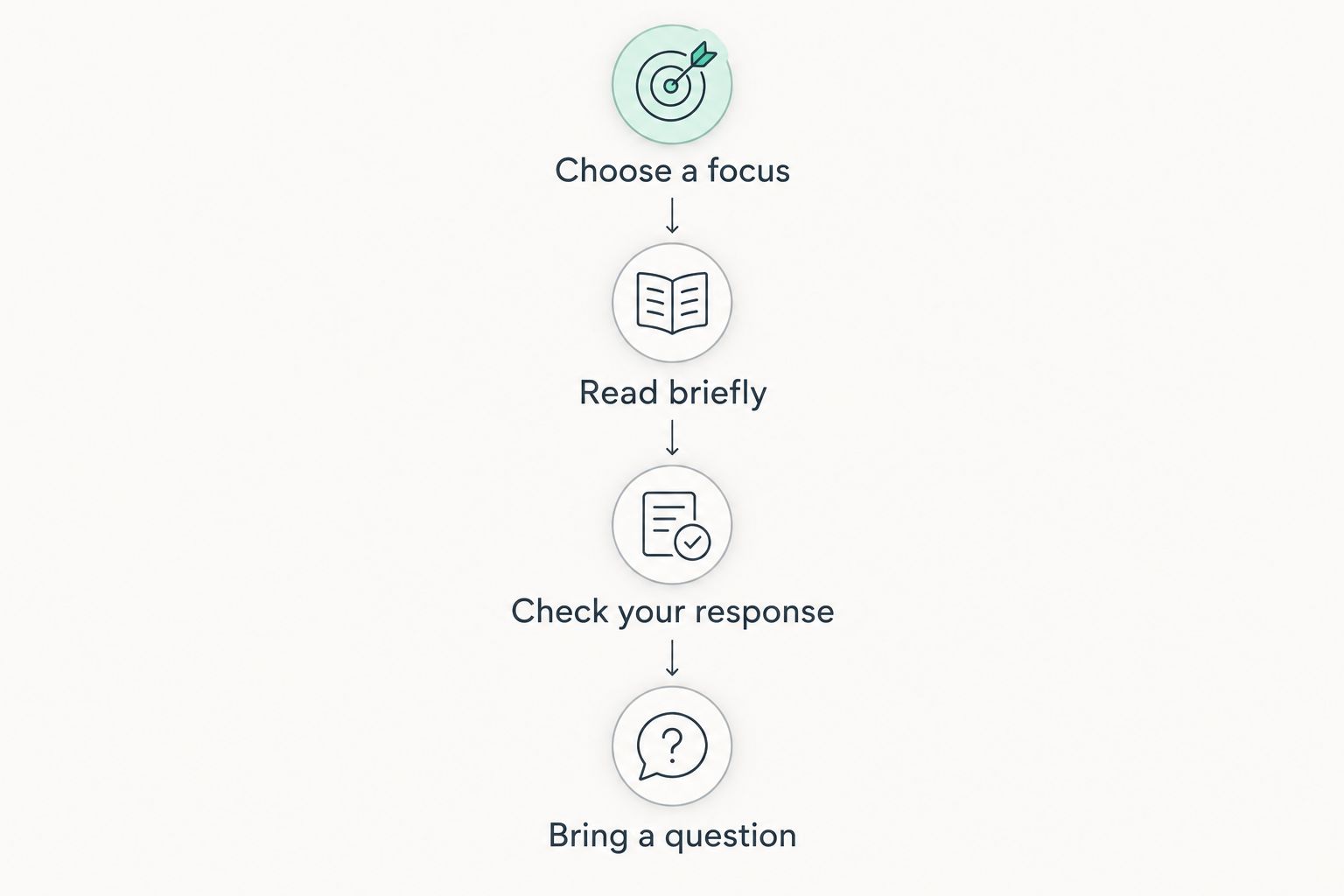
Use this sequence to keep the reading manageable:
- Choose a focus. Pick the question you want the book to help you understand.
- Read briefly. Try 5 minutes rather than setting a chapter quota. This is a pacing suggestion, not a treatment dose.
- Check your response. Notice whether you feel oriented, distressed, tired, or ready to stop.
- Bring a question. Save 1 question for a therapist or another appropriate source of support.
If 5 minutes feels too demanding, read 1 paragraph or stop altogether. Finishing a passage is not more important than staying able to engage with your surroundings.
Calmcharleston offers therapy for people dealing with trauma, anxiety, depression, grief, and life transitions. If you seek support alongside a book, describe the specific reaction or question you want help with rather than arriving with a finished explanation of yourself.
Which complex PTSD book should you choose?
Start with Pete Walker’s Complex PTSD: From Surviving to Thriving if you are undecided. Choose Arielle Schwartz’s The Complex PTSD Workbook instead if guided exercises are the format you will actually use.
For your 2026 shortlist, keep the first purchase tied to one purpose. Add Gibson for family dynamics, Fisher for protective reactions, Herman for recovery context, or van der Kolk for broader trauma-and-body reading only when that question becomes relevant.
FAQ
What’s the best book on complex PTSD to read first?
Pete Walker’s Complex PTSD: From Surviving to Thriving is the default starting recommendation in this guide. It directly addresses complex PTSD, emotional flashbacks, and self-criticism; choose Arielle Schwartz’s workbook instead if you prefer structured exercises.
Is The Body Keeps the Score specifically about complex PTSD?
The Body Keeps the Score covers trauma more broadly rather than serving as a dedicated complex PTSD workbook. Choose it for background on trauma and bodily experience, not as a personalized recovery plan.
Can a complex PTSD book tell me whether I have the condition?
No, a book cannot diagnose complex PTSD. Recognizing descriptions can help you explain your concerns, but diagnosis requires clinical assessment.
What’s the best complex PTSD book if I want exercises?
The Complex PTSD Workbook by Arielle Schwartz is the exercise-focused starting choice in this guide. Work through prompts selectively and stop when the material becomes overwhelming.
Should I read Adult Children of Emotionally Immature Parents for complex PTSD?
Read Adult Children of Emotionally Immature Parents if understanding parenting patterns is your main goal. It is a focused companion, not a complete complex PTSD treatment guide or a way to diagnose a parent.
What should I do if a trauma book makes me feel worse?
Stop reading and turn your attention to your present surroundings. You do not need to finish the section; discuss persistent or intense distress with a qualified mental health professional.
Can I use a trauma book alongside therapy?
Yes, a trauma book can give you questions and passages to discuss in therapy. Calmcharleston offers individual and telehealth therapy for readers seeking professional support alongside trauma reading.
One last thing
Choose the book you can put down without feeling that you have failed. A difficult chapter is not an assignment you owe the author, and finishing every exercise is not proof of recovery. Leave a bookmark at the first passage you want to discuss; that question can be more useful than another completed chapter.