
Best overall: It's OK That You're Not OK by Megan Devine. Best memoir: The Year of Magical Thinking by Joan Didion. Best short reflection: A Grief Observed by C.S. Lewis. The best grief books in 2026 offer different kinds of support; this guide helps you choose between validation, personal stories, grief science, writing prompts, and a children's read-aloud.
- It's OK That You're Not OK is the best grief books starting point for readers seeking validation rather than instructions.
- The Year of Magical Thinking offers companionship through memoir, not a step-by-step bereavement guide.
- The Grieving Brain explains loss through neuroscience; How to Carry What Can't Be Fixed offers grief journaling.
- The Invisible String introduces connection after separation to children, but adults should explain death directly too.
Why this matters
Grief changes what you can tolerate reading. Advice that feels reassuring to one person can feel demanding to another, especially when it suggests that healing requires a deadline or a positive lesson.
Choose a grief book for the support you need, not the progress you think you should be making. A memoir offers recognition; a workbook asks you to participate. Neither is automatically the better choice.
Calmcharleston offers individual, couples, and telehealth therapy, including support for people dealing with grief in Mount Pleasant and Charleston, South Carolina. Books can accompany that support, but they cannot respond to your circumstances the way a conversation can.
What makes the best grief books?
These 2026 recommendations use five criteria. Match the book to your needs before considering its position on the list.
- Emotional fit: Does the book acknowledge pain without insisting that you find meaning, gratitude, or closure?
- Reading effort: Do you want a sustained narrative, short reflections, explanations, or prompts you can approach separately?
- Purpose: Are you looking for companionship, an understanding of grief, a writing practice, or language for a child?
- Beliefs: Does the book's religious or spiritual perspective fit your own, or are you comfortable reading across that difference?
- Boundaries: Does the format suit you now? A personal story is not individualized advice, and a workbook is not an obligation.
There is no budget winner here: the ranking concerns reading fit, not purchasing conditions. Borrowing a book or reading a sample is a useful way to assess its voice before committing.
Best grief books at a glance
| Book and author | Best for | Standout feature | Key limitation |
|---|---|---|---|
| It's OK That You're Not OK — Megan Devine | Validation without pressure | Direct challenge to fixing or rushing grief | Not a structured sequence of exercises |
| The Year of Magical Thinking — Joan Didion | Adult readers seeking memoir | Close examination of thought after a spouse's death | Intense personal narrative rather than practical instruction |
| The Grieving Brain — Mary-Frances O'Connor | Understanding grief science | Neuroscience and psychology of adapting to loss | More explanatory than reflective |
| How to Carry What Can't Be Fixed — Megan Devine | Guided grief journaling | Writing prompts and creative exercises | Requires participation that some readers do not want |
| A Grief Observed — C.S. Lewis | Brief, faith-engaged reflection | Candid examination of grief, love, and belief | Christian context will not suit every reader |
| The Invisible String — Patrice Karst | Conversations with children | Picture-book metaphor for enduring connection | Does not replace a direct explanation of death |
1. It's OK That You're Not OK: best for grief validation
Megan Devine's It's OK That You're Not OK challenges the expectation that grief should be solved or neatly concluded. The book addresses grieving people and the people trying to support them, with particular attention to the difference between acknowledging pain and trying to remove it.
Best for: Adults who feel pressured to recover, accept advice, or explain why they are still hurting.
It's OK That You're Not OK pros:
- Names the problem with treating grief as something to fix.
- Gives supporters another way to think about being helpful.
- Makes room for pain without demanding a positive interpretation.
It's OK That You're Not OK cons:
- Does not offer a linear program for readers who want assignments.
- Its direct criticism of common grief responses is not a neutral overview of every approach.
For Calmcharleston readers comparing grief books, It's OK That You're Not OK is the best starting point when validation matters more than instructions. Choose it when you want your experience acknowledged before anyone suggests what to do next.
Verdict: Buy if you want permission to grieve without a timetable.
2. The Year of Magical Thinking: best for memoir companionship
Joan Didion's The Year of Magical Thinking examines her grief after the death of her husband, John Gregory Dunne, alongside her daughter's serious illness. Didion closely observes memory, ordinary objects, and thoughts that persist even when she knows death is irreversible.
Best for: Adult readers who want recognition through another person's story rather than advice directed at them.
The Year of Magical Thinking pros:
- Gives close attention to the contradictions within grief.
- Shows how loss enters ordinary moments and routines.
- Offers a literary narrative without turning every experience into a lesson.
The Year of Magical Thinking cons:
- Includes death and medical-crisis material that some readers will find difficult.
- Centers one person's marriage and circumstances, not a broad range of bereavement experiences.
You do not have to identify with Didion's life to find parts of the account recognizable. Still, choose a different format if detailed personal loss feels too close right now.
Verdict: Buy if you want a memoir to sit beside your experience, not direct it.
3. The Grieving Brain: best for understanding grief science
Neuroscientist and psychologist Mary-Frances O'Connor's The Grieving Brain explains bereavement through research on attachment, learning, and the brain. The book examines how knowing someone has died differs from adapting to their absence in everyday life.
Best for: Readers who find explanations reassuring and want to understand why grief involves more than conscious acceptance.
The Grieving Brain pros:
- Connects grief experiences with neuroscience and psychology.
- Explores the difference between understanding a death and adapting to loss.
- Offers an explanatory alternative to memoir or spiritual reflection.
The Grieving Brain cons:
- Research explanations demand a different kind of attention than short reflective passages.
- General findings cannot explain every detail of your individual experience.
Choose The Grieving Brain when your main question is why grief feels contradictory. Understanding a process is different from controlling it; the book is an explanation, not a promise that knowledge will stop the pain.
Verdict: Buy if learning about grief helps you approach your experience with less self-blame.
4. How to Carry What Can't Be Fixed: best for guided journaling
Megan Devine's How to Carry What Can't Be Fixed is a grief journal built around writing prompts and creative exercises. Unlike a continuous narrative, it invites you to respond and make room for your own experience on the page.
Best for: Readers who want a starting point for writing but find a blank notebook unhelpful.
How to Carry What Can't Be Fixed pros:
- Provides prompts instead of leaving you to invent a writing topic.
- Gives your own words a central place in the reading experience.
- Offers an active alternative to reading someone else's account.
How to Carry What Can't Be Fixed cons:
- Writing about loss can feel demanding rather than comforting.
- A journal cannot provide feedback when a prompt brings up distress.
Skip any exercise you do not want to answer. The workbook should serve you; completing it is not evidence that you are grieving correctly. Keep your writing somewhere private if sharing space with other people makes honest responses difficult.
Verdict: Buy if prompts feel inviting; skip it if another task feels burdensome.
5. A Grief Observed: best for brief, faith-engaged reflection
C.S. Lewis's A Grief Observed records his reflections after his wife's death. It considers sorrow, memory, love, and religious belief with a candor that differs from a reassuring devotional guide.
Best for: Readers who want a brief, personal account that takes questions about faith seriously.
A Grief Observed pros:
- Offers a shorter reading commitment than a full-length grief guide.
- Allows doubt and religious questioning into the account.
- Stays close to the writer's immediate experience of loss.
A Grief Observed cons:
- Its Christian framework will not match every reader's beliefs.
- Brief passages can still be emotionally intense; short does not mean easy.
Choose this book for its willingness to question, not because you expect settled answers. Readers looking for secular explanation or practical exercises have clearer alternatives elsewhere in this list.
Verdict: Buy if candid reflection on grief and faith matches what you want to read.
6. The Invisible String: best for conversations with children
Patrice Karst's The Invisible String uses an invisible connection between people who love one another to explore separation and connection. It is a picture book for shared reading, not a complete explanation of death or a child bereavement manual.
Best for: Adults seeking a gentle conversation starter about connection with a child.
The Invisible String pros:
- Offers a concrete metaphor you can discuss together.
- Gives children and adults shared language for connection.
- Opens a conversation without requiring a long written explanation.
The Invisible String cons:
- The metaphor does not explain what death means physically.
- Its meaning needs discussion rather than an assumption that every child understands it the same way.
When discussing a death, use clear words such as died rather than relying only on phrases such as went away. Explain that death means the person's body has stopped working, and invite questions without requiring an immediate response.
Verdict: Buy for shared reading, not as a substitute for an honest conversation.
How these grief books are ranked
This 2026 ranking prioritizes emotional fit, reading effort, purpose, beliefs, and boundaries—not a claim that one book produces better clinical outcomes. Each title occupies a different role so you can choose without treating grief as a competition.
Calmcharleston's grief books guide places validation first because that is the clearest default for a reader who has not chosen a format. A reader actively seeking neuroscience, religious reflection, or a children's book should start with that specific category instead.
How to start reading when concentration is difficult
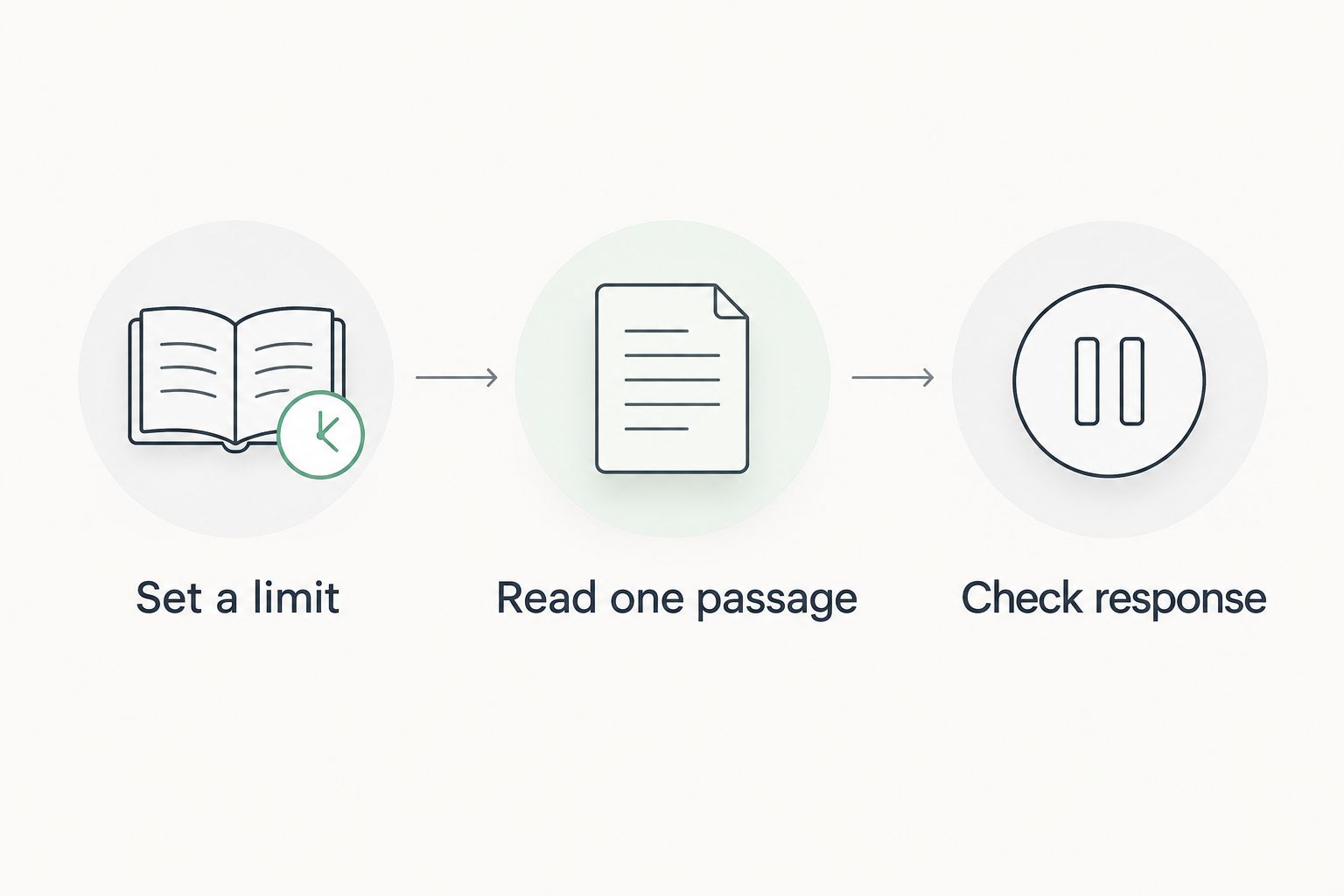
Use a small reading experiment rather than a completion goal. For your 2026 reading plan, these are optional limits, not treatment instructions:
- Set a limit: Try 5 minutes, with permission to stop sooner.
- Read one passage: Start with 1 page rather than committing to a chapter.
- Check response: Take a 10-minute pause before deciding whether to continue.
Notice whether you want more of the book, a different format, or no reading at all today. None of those choices needs defending.
Which grief book should you choose?
Start with It's OK That You're Not OK if you are undecided. Choose The Year of Magical Thinking for memoir, The Grieving Brain for explanation, or How to Carry What Can't Be Fixed for writing. Choose A Grief Observed for faith-engaged reflection and The Invisible String for shared reading with a child.
Books are not a test you must pass before asking for help. If grief is disrupting daily life or you want someone to talk with, Calmcharleston offers grief-related counseling support alongside its other therapy services.
Explore grief counseling support
Learn about individual, couples, and telehealth therapy in Mount Pleasant and Charleston, SC.
FAQ
What's the best grief book to start with in 2026?
It's OK That You're Not OK by Megan Devine is the best starting point in this guide for adults seeking validation. Choose another title first if you specifically want memoir, neuroscience, journaling, or a children's book.
What's the best grief book after losing a spouse?
The Year of Magical Thinking is a strong memoir choice after losing a spouse. Joan Didion writes about her husband's death, but the book offers personal reflection rather than individualized guidance.
Is The Grieving Brain better than It's OK That You're Not OK?
The Grieving Brain is better for readers seeking scientific explanation; It's OK That You're Not OK is better for readers seeking validation. Choose according to the kind of support you want rather than treating either book as universally better.
What's a good grief book to read with a child?
The Invisible String offers a conversation starter about connection and separation. Read it together and explain death directly when bereavement is the reason for reading; the metaphor alone is not a complete explanation.
Do I have to finish a grief book for it to help?
You do not have to finish a grief book. Read selected passages, change books, or stop when the material does not fit what you need.
Can grief books replace counseling?
Grief books do not replace individualized counseling. A book provides information or companionship, while a therapist can respond to your circumstances, distress, and questions.
Should I give a grieving friend a workbook?
Ask before giving a grieving friend a workbook. Writing exercises require participation, and an unsolicited workbook can feel like an assignment rather than support.
One last thing
Before giving a grief book, ask whether the person wants reading material at all. A thoughtful recommendation leaves room for refusal. Offer the book without asking for updates, expecting completion, or treating its message as something the person needs to learn.